

It is possible that many people may have already forgotten the old adage “Health is Wealth”, however this saying still rings true for any present day family.
The adage becomes more palpable when there are young family members who may not be as adept as older members in taking care of themselves so that they may not end up in the emergency room.
When someone is sick, it is important for the care giver, normally you as the parent, to not become anxious and stressed because these would only complicate the situation at hand. We understand how not being stressed out is difficult to achieve especially when you are deeply agonized so to help you stay calm (and hopefully healthy too!) when your child is sick, we have decided to write down 7 very important things to do when your child is sick.
#1 Know the Difference between When To and When Not To.
The fact is, you – like any other parent, worry a lot immediately if your child vomits or feels slightly feverish. However, it is important for you to know which signs and symptoms would require you to immediately contact health care professionals. For example, at times vomiting is merely vomiting, but if it is starting to cause dehydration, it may be necessary to bring your child to a health clinic.
#2 Hire the Right Team
Doctors, nurses and everyone in the medical field have their own expertise. Even paediatricians have varying fields of exposure – some look after children born with neonatal disabilities while others work on less complicated cases. It is very important for you to avail the services of the right medical team for your child to get the right treatment.
#3 Get your Child to Rest and Sleep
Surprisingly enough, there are children who stay active and awake even when they are sick. Primarily this is because of their desire for continuous playtime. Still, children cannot get better unless they have had enough sleep and rest throughout their condition. Ironically, for children who do sleep when they are sick, sleeping time may be interspersed with periods of wakefulness and restlessness – with some having nightmares. To keep your child rested and asleep throughout the night, try sleeping in his room for the meantime. That way, when your child suddenly wakes up, he will find it easier to go back to sleep, seeing and knowing that you are around.
#4 Feed your Child the Appropriate Diet
Children’s food intake must be regularly monitored so that children will remain fit and healthy. But there may be specific food types that children are not allowed to have, depending on the nature of their illness. Hence, when your child is ill, your monitoring of his intake has to be consistent to ensure that your child is consuming the right food and the right amount of food needed to help him get better.
#5 Personal Hygiene is Great Defence
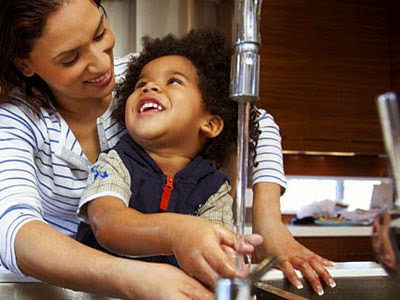
Hand-washing and other personal hygiene behaviours are always good defences against the spread of diseases. Whether your child is down with fever or sick due to bacterial or viral infection, always assist him whenever he is engaged in hygienic actions so that you can make sure that he is doing it correctly.
#6 Be More Caring
Children who are experiencing maladies will feel better and get better faster if caregivers show them enough love and care. So when your child has the same experience, be more patient and try to understand his situation. He might cry, whine and cling to you more. He might even scream because of his discomfort. But show him love all throughout because this is what he needs and this is what he wants. It can be a tiring thing but remember he needs you during his time of illness more than when he is up, healthy and active.
#7 Should you Work or Should you Stay at Home?
Most parents are either self-employed or working for others. When you have a job and your child gets sick, you may be torn between your responsibilities as your child’s primary caregiver and as a worker. Whereas you can take time off easily when you are self-employed, it may be another story if you are an employee. Still, you can solve this problem by asking your company about its policies relevant to medical concerns of children. In the event that the policies are not too medical needs friendly, always have a back-up caregiver to help you out.
